
Why 3D Printing Quotes Differ So Much — and How to Tell Which One to Trust


The same part, the same drawing, and three quotes come back anywhere between 80 and 200. At that point the question is not who is cheapest but what sits behind each figure. Below we go through where the price differences come from, how to judge them, and how to line the quotes up.
1. The core judgement
A wide spread is usually not simply expensive versus cheap, but three things left unaligned: a different process route, a different scope of work, and a different cost structure. Line those three up before comparing numbers and the comparison means something. Ordering on lowest price alone often gets paid back later in lead time or finishing.
2. Why prices differ so visibly
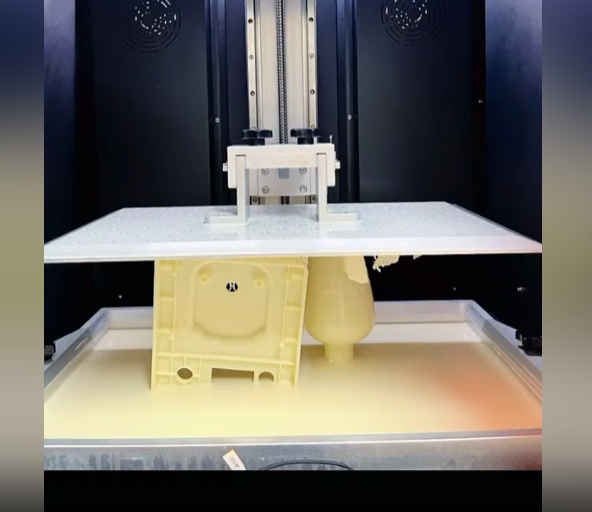
- Different process — the same part can be made in SLS, MJF, SLA or FDM, and material consumption and machine time differ widely, so the prices should not be identical in the first place.
- Different scope — whether sanding, bead blasting, dyeing and painting are included makes an obvious difference; some low quotes are in fact for an unfinished blank part.
- In-house equipment or not — an own production line and an outsourced order each carry a layer of cost, and outsourcing adds coordination and lead-time risk.
- Different quotation basis — priced by gram, by volume or per part, with or without freight and tax, all change the final figure.
- Finishing and inspection — whether critical dimension checks and packaging are included shows up in the price as well.
Taken apart, two quotes that look like they differ by a factor of two may simply mean one of them excluded finishing, or that they were never the same process to begin with.
3. Five steps to judge which quote is more reliable
- Step 1: establish the process route and the material grade. The same part made by different processes should not cost the same — first confirm you are comparing like with like.
- Step 2: establish what the quote includes and whether finishing is inside it or charged separately. This is the single most common source of misunderstanding.
- Step 3: confirm whether the equipment is in-house or outsourced. A supplier with its own line controls lead time and quality more reliably.
- Step 4: confirm that the lead time is written into the order — a verbal promise and a contractual line are two different things.
- Step 5: align all quotes to the same basis, flattening process, scope and lead time, and then compare price.
After those five steps there is usually only one or two real differences left, and the decision becomes much clearer.
4. Common basis differences at a glance
When two quotes diverge, run down this list to find where:
- One includes dyeing, the other does not — the gap may be exactly the finishing cost.
- One is SLS, the other FDM — different processes, different price level and different performance.
- One has its own powder supply, the other buys in — material cost differs, and so does batch consistency.
- One prices per part, the other by gram — per-part suits small parts and per-gram is more transparent on large ones, so the two are not directly comparable.
- One includes tax, the other does not — the difference looks large but is only the tax.
5. Who this suits, and who it does not
This approach suits the situation where several quotes are already in hand and a choice has to be made. If you only need a budget figure, asking the supplier for a range first is quicker; if the design is still changing, a quote at this stage is of limited use and it is more accurate to ask once the drawing is settled. Beyond price, look at the supplier’s process capability and lead-time commitment — the cheapest option is not always the least trouble.
6. Primofort’s approach
Before quoting, Primofort confirms the process route (SLS / MJF / SLA / SLM / FDM or CNC), the material grade and the finishing requirements, then gives price and lead time on one consistent basis. On receiving a drawing (STL, STEP or IGS are all fine), a printability check comes first, and anything that needs modifying is raised before the quote rather than halfway through the job. Standard prototypes take 1–2 days and small-to-mid batches 3–5 days, with lead time quoted against the confirmed process.
Conclusion
If you want to line up the quotes you already have, send the drawing along with them and we can break down the process and scope assumptions and judge which looks more reasonable. Mention any specified process or deadline too, and the quotation will be more accurate.